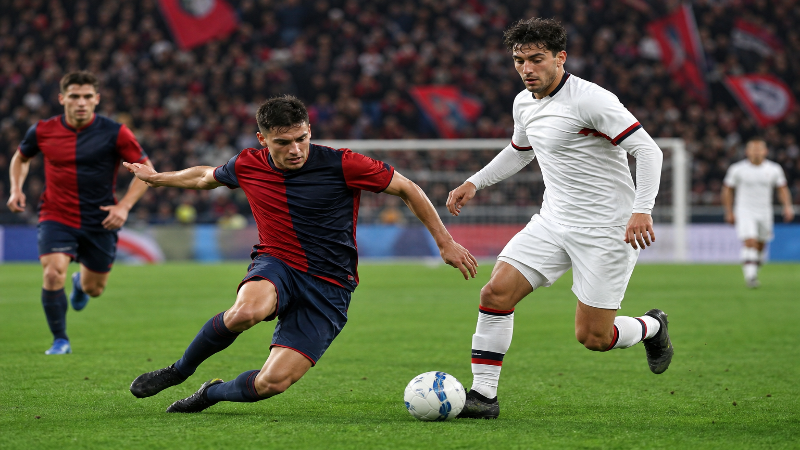
The pattern of this fixture has been written in fine margins. AC Milan hold a clear historical edge over Genoa, and the most common scoreline between the sides is a razor-thin 0-1—recorded eight times. In Genoa’s own stadium, Milan have taken 10 wins from the last 19 visits (5 defeats, 4 draws), with a 24-15 goal difference that underlines a steady away efficiency rather than dominance by volume.
Stretch that lens to the last 40 meetings and Milan lead 22 wins to Genoa’s 7 (11 draws), a 54-32 aggregate that reinforces the Rossoneri’s longer-term control. Crucially for the home crowd, Genoa have not beaten Milan at home since 2016; last season brought a 1-2 defeat in Liguria before a scoreless stalemate in Milan.
If this matchup often hinges on a single moment, the timing trends offer a blueprint. Genoa score 30% of their goals from minutes 76-90, making them a dangerous late-side—especially with substitutes injecting urgency and aerial threat. Milan’s 25% strike rate between 31-45 points to a pre-interval surge, when their structure and tempo typically pin opponents deeper. That clash of rhythms—Milan pushing before half-time, Genoa rallying late—could again decide the flow.
The numbers hint at a low-scoring tilt. Genoa have failed to score in 8 of 18 Serie A home matches this season, while Milan have blanked in 4 of 18 away games. Those figures, combined with the prevalence of single-goal margins, make control of territory and set‑piece discipline paramount.
For Genoa, the route to an upset likely runs through patience and late pressure. Lorenzo Colombo, the club’s top scorer on seven goals, will need supply lines early and support as legs tire late. Transitions down the channels and second balls around the box are the most promising levers against Milan’s compact phases.
For Milan, protecting their first-half strength is vital. Quick circulation into the half-spaces and early crosses can test Genoa’s back line before the hosts settle. If the Rossoneri seize that window, they tilt the match toward familiar ground: a narrow advantage to manage. Either way, expect intensity to climb after the hour, when Genoa traditionally find a second wind and this rivalry so often balances on a single strike.