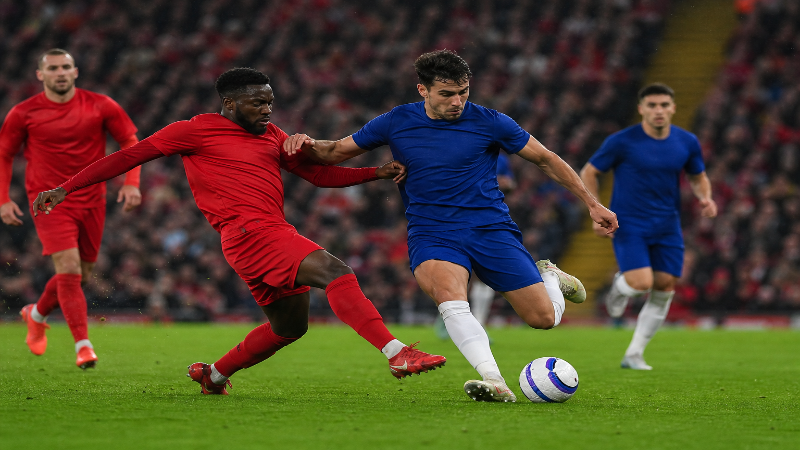
Momentum versus history sets the stage at Anfield. Liverpool arrive on a three-match Premier League winning run, while Chelsea travel under the weight of five straight league defeats. Yet the rivalry’s defining trait is balance: across the last 90 meetings, Liverpool have 29 wins to Chelsea’s 30, with 31 draws and a razor-thin goal difference that actually leans 104–103 to the Blues. The most common scoreline between these clubs is 1-1—15 matches overall and eight times when Liverpool host—reminding both sides that this fixture often resists narratives.
Anfield, however, does move the needle. In the last 39 encounters on Merseyside, Liverpool lead 18 wins to Chelsea’s nine with 12 draws, and a 61–42 goal difference in their favor. Chelsea last celebrated an away league win here in 2021, while last season followed the home-side logic: Liverpool won 2-1 at Anfield and Chelsea answered 3-1 at Stamford Bridge. That pattern—tight margins, home advantage—frames this edition.
Form lines suggest Liverpool can press their edge. The Reds’ current streak speaks to control in key moments, while Chelsea’s slide highlights fragility under pressure. In a rivalry this tight, the first goal often carries outsized weight, and the historical trend of 1-1 underlines how fine details—set-piece execution, box defending, decision-making in transition—tend to decide the outcome.
For Liverpool, extending the run would fortify momentum and reassert Anfield’s status as a results engine. For Chelsea, a positive result would be less about optics and more about halting a damaging spiral; a point could stabilize confidence, while a win would be season-reframing given the venue and recent form. The duel is as much psychological as tactical: can Liverpool convert control into scoreboard security, and can Chelsea manage moments to neutralize the crowd and slow the tempo?
Expect intensity from the opening whistle. History points to narrow margins and a draw that refuses to go away; current form nudges toward Liverpool. Somewhere between those poles lies the most likely reality—a cagey, possession-traded contest in which composure in both penalty areas decides whether this chapter skews to tradition or to the team riding the stronger wave.