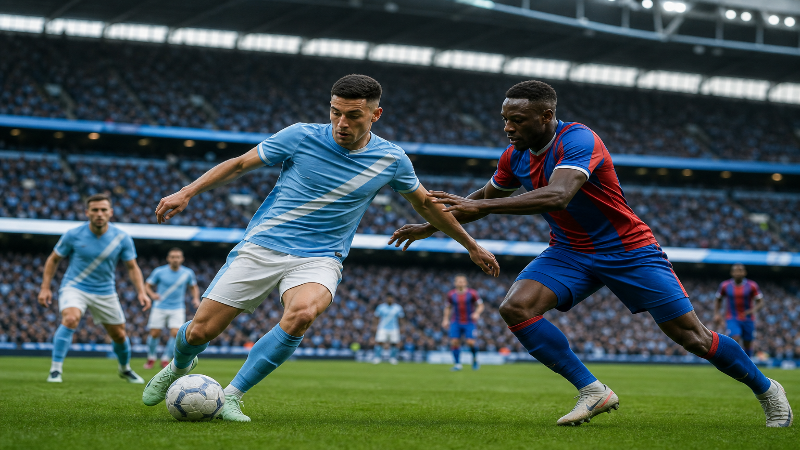
Manchester City enter this Etihad clash on an eight-match unbeaten run and with a history that strongly tilts their way against Crystal Palace. The numbers are emphatic: City have won 12 of the last 18 home meetings (4 draws, 2 losses) with a 50-18 goal difference, and lead the overall head-to-head 24 wins to 7 (8 draws), 84-36 on goals. Even so, Palace’s last away win here in 2021 and last season’s 2-2 draw at Selhurst Park underscore their capacity to disrupt elite opponents, despite City’s 5-2 statement at home in the same campaign.
The most telling trend is the shared scoring surge between minutes 31-45: City net 28% of their goals in that window, while Palace strike 32%. That midpoint uptick often flips match momentum. For City, it reflects their pattern of sustained probing before accelerating just before halftime; for Palace, it’s the moment when compact defending and quick transitions can yield high-value chances.
Expect Manchester City to dictate territory and possession, with the hosts rarely blanked at the Etihad (they’ve failed to score in just 1 of 17 Premier League home matches this season). Palace’s best route is clear: remain organized in the low-to-mid block, compress central lanes, and trigger fast counters into the channels when City’s full-backs advance. Set pieces could be a valuable leveller for the visitors, who will look to attack second balls and draw City into defensive duels.
Key questions hinge on tempo and patience. Can Palace ride out City’s late-first-half surge? Can City convert territorial dominance into early shots on target, forcing Palace to open up? Recent history at this ground favours the champions—City are unbeaten in their last three home meetings against Palace—and the broader eight-game unbeaten streak points the same way.
Outlook: City are strong favourites to extend their run, particularly if they control the 31-45 window and manage transitions cleanly. Palace, however, have shown that a single clinical counter or set piece can bend the script. Expect a measured City performance, territorial control, and chances clustering before halftime, with Palace aiming to drag the contest deep and capitalize on moments rather than volume.