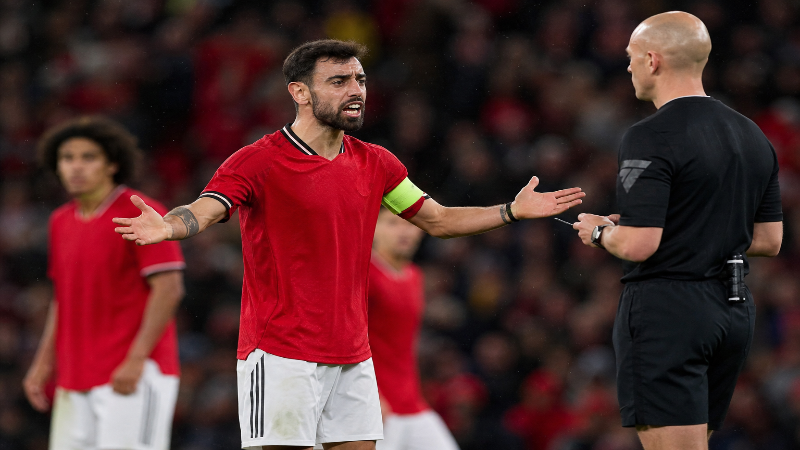
Roy Keane has stoked another fierce debate around Manchester United’s standards and leadership after sharing a cryptic ‘donkey’ post on social media in the wake of Bruno Fernandes publicly dismissing what he called a “lie” about his play. The former United captain doubled down on his criticism during The Overlap, homing in on Fernandes’ admission after the Nottingham Forest game that he had chosen to pass a few times instead of shooting while chasing a new assist mark.
“After the [Forest] game he got interviewed and he said, the captain of Manchester United said: ‘A few times, I probably should have shot but I made them passes,’” Keane said. “Wow. How can your mindset of a footballer be going into a match to be about an individual record? He won’t be winning trophies, not with that mindset of the team.”
Keane’s words cut to the core of an enduring debate at Old Trafford: should a captain’s decision-making be judged by statistical milestones or by risk-taking that maximizes team outcomes? Fernandes has been central to United’s chance creation for several seasons and recently surpassed a landmark assist tally, but critics argue that moments demand ruthlessness rather than calibration for numbers. Supporters of the Portuguese playmaker counter that elite decision-making often means picking the highest expected-value action, and that creativity can be as decisive as finishing.
The Forest match offered a microcosm. Fernandes’ passing influence was again evident, but the captain’s own post-match reflection brought the spotlight onto the tension between an individual’s pursuit of excellence and the collective aim of winning. In modern football, where analytics inform player choices, the line between personal milestones and team-first pragmatism can blur—especially for a captain expected to set the tone in high-leverage moments.
Keane’s “donkey” hint, perceived by many as a pointed metaphor for poor decision-making or stubborn habits, amplified the noise. While he did not name individuals in that post, the timing alongside his broadcast remarks gave fans and pundits a clear target for discussion. The exchange underscores the scrutiny United’s leaders face and the narrow margins by which they are judged in the Premier League.
As the debate simmers, two truths coexist: Fernandes remains United’s most consistent creative outlet, and Keane’s demand for a harder edge reflects a traditional view of captaincy forged in title-winning dressing rooms. Whether United strike the balance between data-driven craft and ruthless end-product may shape not only their results, but also the narrative surrounding their captain and the club’s evolving identity.